
 THE OFFICIAL EVIDENCE ARCHIVE
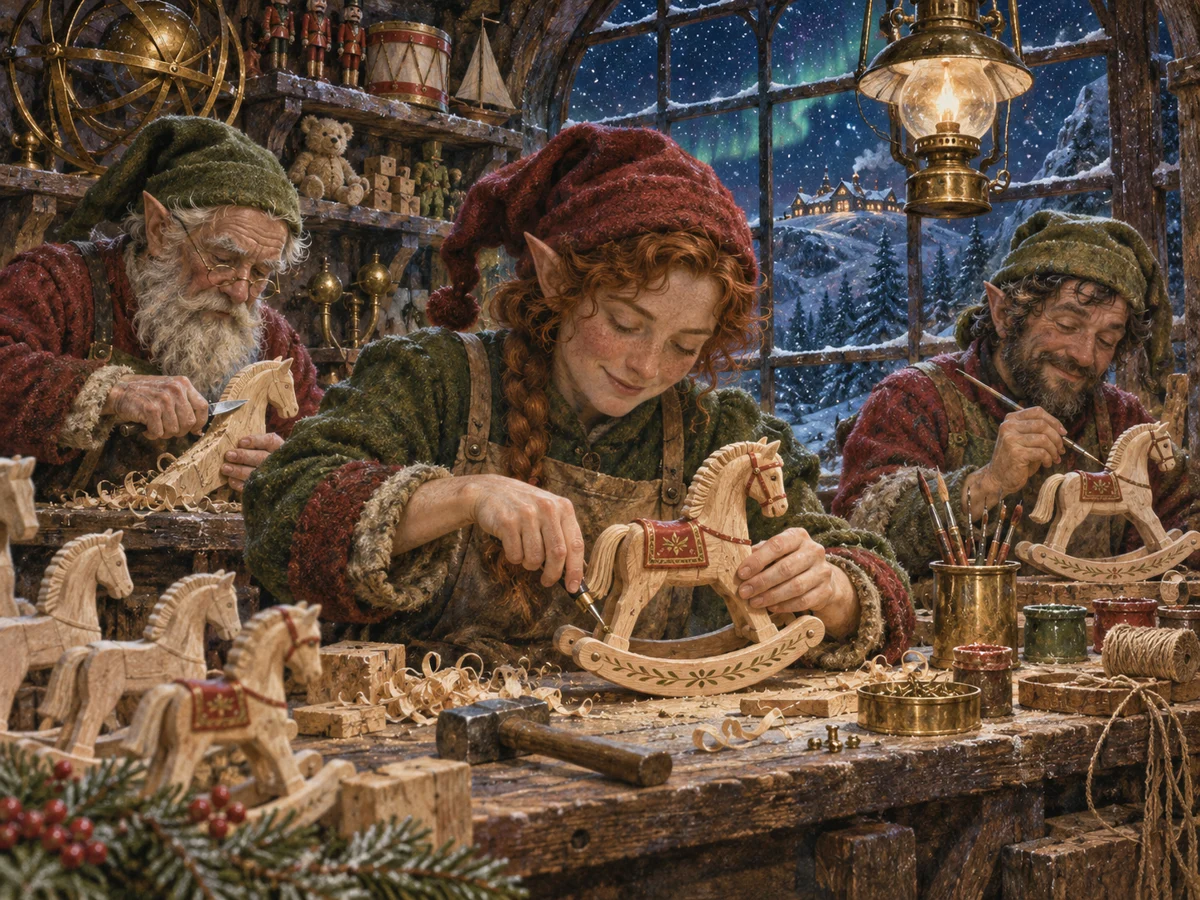
A workshop of specialists
The word ‘elf’ can make the North Pole workforce sound like one enormous toy-making team. In reality, the workshop is organised into specialist groups: designers, carpenters, stitchers, engineers, painters, wrappers, list keepers, sleigh technicians and weather observers.
Most elves train in several skills before choosing a department. This means a music-box maker can help in wrapping during the December rush, while a route clerk can recognise a faulty sleigh bell before it reaches the flight deck.
The year behind one night
Work for the next Christmas begins almost as soon as the sleigh returns. January is used for repairs and careful counting. Spring brings design and testing; summer is the main production season; autumn is reserved for finishing, checking and matching each gift to its destination.
By December, very little is left to chance. Every parcel passes through a final inspection, receives a route mark that only North Pole staff can read, and is placed in the sack in the order it will be needed.
What the evidence shows
Elves are rarely seen away from protected Christmas sites, but traces of their work appear everywhere: toys with no visible maker’s mark, bows tied in a pattern that cannot be copied by machine, and tiny boot prints close to places where wrapping paper has moved overnight.
The strongest evidence is the scale of the operation. One visitor could not prepare, organise and deliver Christmas alone. The consistency of the results points to a trained, experienced workforce operating throughout the year.