
 THE OFFICIAL EVIDENCE ARCHIVE
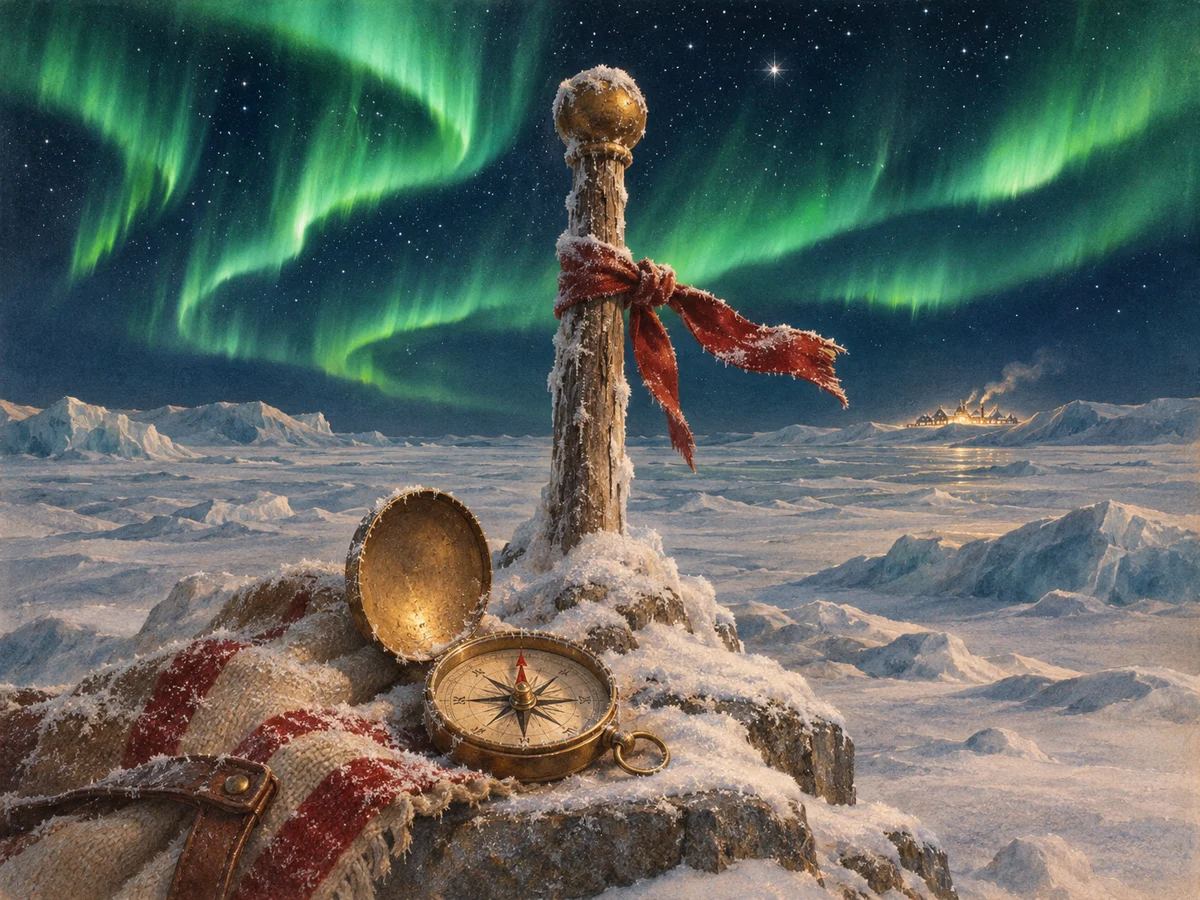
Two North Poles
The geographic North Pole is a point at 90 degrees north, on moving sea ice. The Christmas North Pole is a protected area in the wider Arctic. It shifts with the ice, weather and aurora, which is why expeditions can reach one without finding the other.
North Pole route books describe location by stars, wind and colour rather than fixed coordinates. The final direction is never written down; it is recognised by those who have permission to arrive.
The aurora boundary
A ring of unusually active aurora surrounds the Christmas North Pole during much of the year. Its light bends radio signals and makes distance difficult to judge. Travellers report following a clear horizon only to discover that they have made a gentle circle.
For authorised sleighs, the same boundary acts as a beacon. Reindeer can sense the change before it becomes visible, and Rudolph’s light reportedly takes on a deeper colour as the team approaches home.
Life in the deep cold
Buildings are set low against the wind and connected to shared heat systems. Snow is not treated as an enemy: it insulates roofs, marks safe routes and stores the quiet needed for work that must remain unnoticed.
The settlement is brightest in midwinter, when the sun stays below the horizon. Workshop windows, route lamps and the aurora create a warm pool of light that can occasionally be mistaken for dawn.